-
Sale!
¥159.00 Original price was: ¥159.00.¥118.00Current price is: ¥118.00.
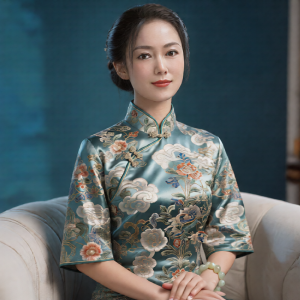
As a Buddhist talisman, Hotan Jade prayer beads are imbued with spiritual connotations of auspiciousness, protection, and self-cultivation. This intangible cultural value is a significant characteristic that distinguishes them from ordinary jade ornaments
-
Sale!
¥159.00 Original price was: ¥159.00.¥126.00Current price is: ¥126.00.
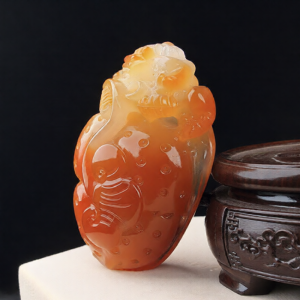
Perfect for products that represent strength and resilience, inspired by the vast and challenging Himalayan range.
-
Sale!
¥399.00 Original price was: ¥399.00.¥318.00Current price is: ¥318.00.
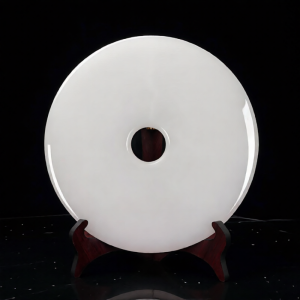
The Heshi Bi is the most legendary jade in Chinese history. It derives its name from the story of Bian He’s jade offering: During the Spring and Autumn Period, Bian He, a man from the state of Chu, presented two raw jade stones that were mistaken for stones. He was subsequently cut off both feet, and finally, King Wen ordered someone to cut open the stone, revealing a rare and beautiful jade.
During the Warring States period, this jade was lost in the state of Zhao, leading to the anecdote of King Zhaozhao of Qin offering to exchange it for fifteen cities. Lin Xiangru was ordered to go to Qin, and with his wisdom and courage, he successfully returned the jade to Zhao, safeguarding the dignity of the country.
After the Qin Dynasty conquered the six states, Emperor Qin Shi Huang carved the He Shi Bi into the imperial jade seal, inscribing the eight characters “Appointed by Heaven, Longevity and Prosperity”. Since then, it has become a symbol of the imperial power being granted by heaven, and emperors of successive dynasties have vied for its inheritance. However, during the Later Tang Dynasty in the Five Dynasties period, the imperial jade seal mysteriously disappeared along with the last emperor’s self-immolation, and its whereabouts have remained a mystery for thousands of years.
-
Sale!
¥159.00 Original price was: ¥159.00.¥118.00Current price is: ¥118.00.
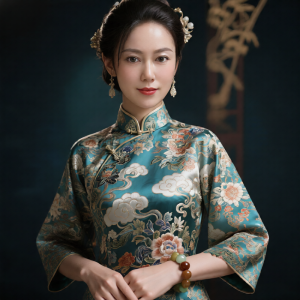
Hotan Jade is divided into six categories and nineteen grades.
The six categories are: white jade, greenish white jade, green jade, jasper, black jade, and yellow jade.
Among these six categories, white jade is divided into four grades, namely: special-grade white jade – mutton fat jade, first-grade white jade, second-grade white jade, and third-grade white jade.
The remaining categories are each divided into three levels.
It is worth noting that there is no clear boundary between the “categories” and “grades” of Hotan Jade, and most of them are gradually transitioning.
-
Sale!
¥398.00 Original price was: ¥398.00.¥318.00Current price is: ¥318.00.
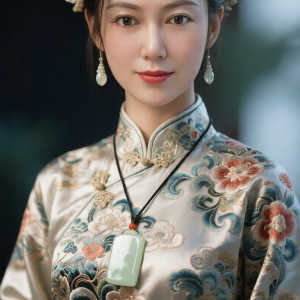
The Ping An Pendant, as one of the most classic motifs in Chinese jade culture, is actually used across multiple levels, from spiritual beliefs to daily life. Having previously delved into the purposes of Buddhist beads and the presentation of jade, looking at the Ping An Pendant now, you will find that it not only shares a similar core meaning of “blessing” but also has a more concise and universally applicable external expression.
-
Sale!

¥1,699.00 Original price was: ¥1,699.00.¥1,158.00Current price is: ¥1,158.00.
Hotan Jade bracelet, characteristics: the most noble and elegant variety. The mutton fat white jade bracelet is warm and smooth like fat, with a soft whiteness and a restrained luster. Temperament: the wearer appears dignified, gentle, and pure, making it the first choice for heritage-level jewelry.
-
Sale!
¥980.00 Original price was: ¥980.00.¥818.00Current price is: ¥818.00.
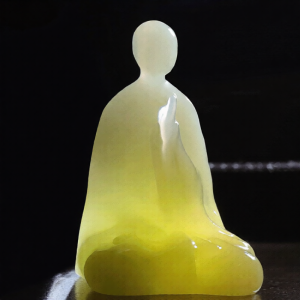
Although faceless, good bodiless Buddha works “are beautiful in their spirit, not in their appearance”. They do not rely on expressions, but convey a sense of tranquility and devotion through the Buddha’s body language (such as standing with a slight bend, hands folded, and sitting in meditation), smooth and concise lines, and the creation of the overall environmental atmosphere. This realm of “intent in the knife’s first stroke, vivid charm” demands even higher aesthetic and technical skills from jade carvers
-
Sale!
¥988.00 Original price was: ¥988.00.¥898.00Current price is: ¥898.00.
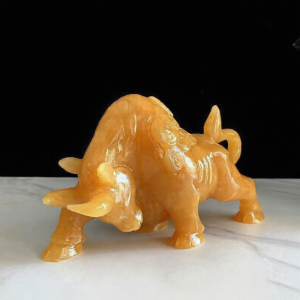
Guardian of agricultural civilization: In traditional agricultural societies, cattle served as the most crucial labor force for households, symbolizing a bountiful harvest and favorable weather conditions.
-
Sale!
¥189.00 Original price was: ¥189.00.¥158.00Current price is: ¥158.00.
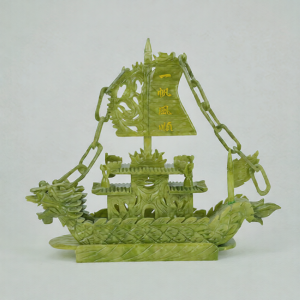
Lucky Implication: The core symbol is “sailing smoothly,” implying unimpeded career progress and smoothness in everything. At the same time, the dragon boat also represents authority and success, and can enhance financial fortune
-
Sale!
Rated 5.00 out of 5
¥598.00 Original price was: ¥598.00.¥516.00Current price is: ¥516.00.
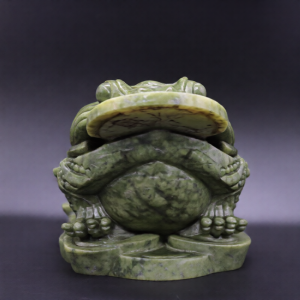
There is a folk saying that “he who obtains a golden toad will become extremely wealthy”. Its shape, with a coin in its mouth, directly symbolizes “spitting out money”, implying abundant wealth and attracting wealth and treasures